Medtronic (MDT): Q2 sales up 4.5% to $9.4bn as heart-rhythm device sales jump 18%
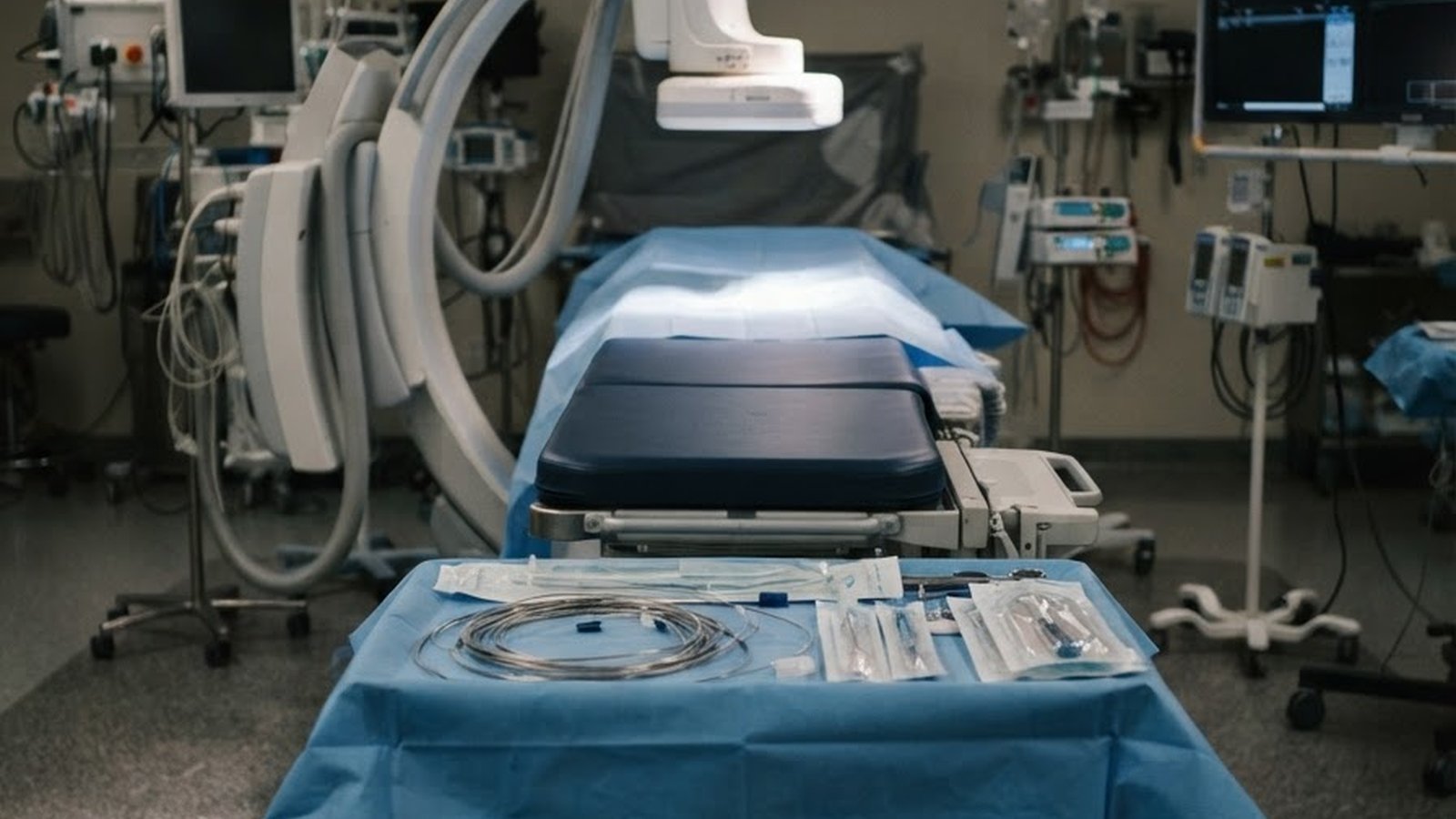
Medtronic, one of the world's largest makers of medical devices, said sales rose 4.5% to $9.36 billion in the three months to 30 October 2026, or 6.5% once the diabetes business it has just split off and currency moves are stripped out. Devices that treat irregular heart rhythms grew 18%. Reported profit roughly doubled because of a one-off $2 billion gain on the split, while adjusted profit per share slipped to $1.34, and the company kept its forecast for the year.
What happened
On Tuesday 24 November 2026 Medtronic, which is based in Galway, Ireland and listed in New York, reported results for the second quarter of its 2027 financial year, the three months to 30 October 2026. Worldwide sales were $9.364 billion, up 4.5% from $8.961 billion a year earlier. The quarter was shaped by a big change in the company: on 15 October it completed the separation of its diabetes business, MiniMed Group, through an exchange offer, in which Medtronic shareholders could swap their shares for MiniMed shares. That produced a one-off accounting gain of about $2.0 billion. The company repeated its forecast for the year: organic sales growth of 7.25% to 7.75% and adjusted profit per share of $5.94 to $6.00. Reuters reported that sales came in below what analysts had expected, while adjusted profit per share was a cent above their average estimate.
The numbers, explained
Start with sales. The reported figure of $9.364 billion is up $403 million on a year ago, and 403 divided by 8,961 is 4.5%. Medtronic also gives an "organic" figure, which removes currency swings, recent purchases and sales, and the revenue it books as "Other", which now includes the diabetes business up to the split. Other revenue fell from $792 million to $629 million, a drop of $163 million or 20.6%, because diabetes was only part of the quarter. On the organic basis sales were $8,698 million against $8,164 million, up $534 million or 6.5%. The heart business, called Cardiovascular, was the engine: sales rose $349 million, or 10.2%, to $3,785 million, about 40% of the total. Within it, Electrophysiology Therapies, devices that diagnose and treat irregular heart rhythms, grew about 18%, from $1,825 million to $2,157 million ($332 million more), and the company said its cardiac ablation products, which treat those rhythms by scarring tiny areas of heart tissue, grew 58%, and 80% in the US. Neuroscience grew 5.1% to $2,705 million and Medical Surgical 3.9% to $2,245 million.
Profit needs more care, because the split distorts it. Under standard US accounting rules (GAAP), net profit was $2,802 million against $1,374 million, up 103.9%, and profit per share was $2.20 against $1.07, more than double. Almost all of that jump is the $1,983 million gain on the split, which will not repeat. Medtronic's adjusted (non-GAAP) figures remove that gain and other one-off items. On that basis net profit fell $46 million, from $1,746 million to $1,700 million, about 3%, and profit per share fell 1.5%, from $1.36 to $1.34. The adjusted operating margin, the share of each dollar of sales left after the costs of making, selling and developing products, slipped from 24.1% to 23.4%. Cash was stronger: over the first six months free cash flow, the cash from operations left after spending on equipment and buildings, was $2,621 million ($3,515 million less $894 million), up from $1,041 million a year earlier.
Why it matters
Medtronic makes its money selling devices and equipment to hospitals and surgeons in more than 150 countries, from pacemakers and heart catheters to spinal implants, surgical tools and patient monitors. Hospitals and health systems are its main customers, and its rivals include Boston Scientific, Abbott and Johnson & Johnson. The quarter shows the company is leaning harder on its heart business: electrophysiology alone brought in about $2.16 billion, and its newer pulsed field ablation catheters, a way of treating irregular heartbeats with short electrical pulses rather than heat or cold, are where most of the growth is coming from. MedTech Dive reported that J.P. Morgan analysts thought cardiac ablation sales of roughly $595 million were below their own expectations, which shows how closely that one product line is now watched. Removing diabetes makes Medtronic a smaller but more focused company. Reuters reported that the finance chief, Thierry Piéton, said the separation would trim organic growth for the year by about 0.2 percentage points, which the company says its unchanged forecast already absorbs.
What to watch next
The dated items in the company's own announcements are few but concrete. Medtronic agreed on 16 November to buy Contego Medical, a private maker of devices for narrowed neck arteries and blood-clot removal, for $380 million plus possible later payments, and said it expects to complete the deal in its fiscal third quarter, the period now under way. The company also said two of its procedures, Altaviva and the Symplicity Spyral system for high blood pressure, have received new US billing codes, known as Category I CPT codes, that take effect in January 2028. The full-year forecast of 7.25% to 7.75% organic growth and $5.94 to $6.00 adjusted profit per share is the yardstick for the rest of the year. Medtronic has not yet announced the date of its third-quarter results, and nothing here is a prediction of how they will turn out.
- Organic growth: sales growth after removing currency moves, purchases, disposals and the separated diabetes business
- Adjusted (non-GAAP) profit: profit with one-off items such as the $2bn split-off gain taken out
- Electrophysiology: the medical field that diagnoses and treats problems with the heart's electrical rhythm
Sources
- Medtronic reports second quarter fiscal 2027 results (Medtronic, primary, with financial schedules)
- Medtronic misses quarterly revenue estimates after diabetes business spinoff (Reuters via KELO)
- Medtronic continues to see growth in cardiovascular business (MedTech Dive)
- Medtronic to acquire Contego Medical, expanding access to next-generation carotid therapies (Medtronic, primary)
More on Medtronic (MDT) · Healthcare takes
For information only. Not financial advice. See our disclaimer and editorial standards. Spotted an error? Tell us.