Eli Lilly (LLY): Revenue up 39% to $24.4bn as Mounjaro and Zepbound lift sales, and it raises its 2026 sales forecast
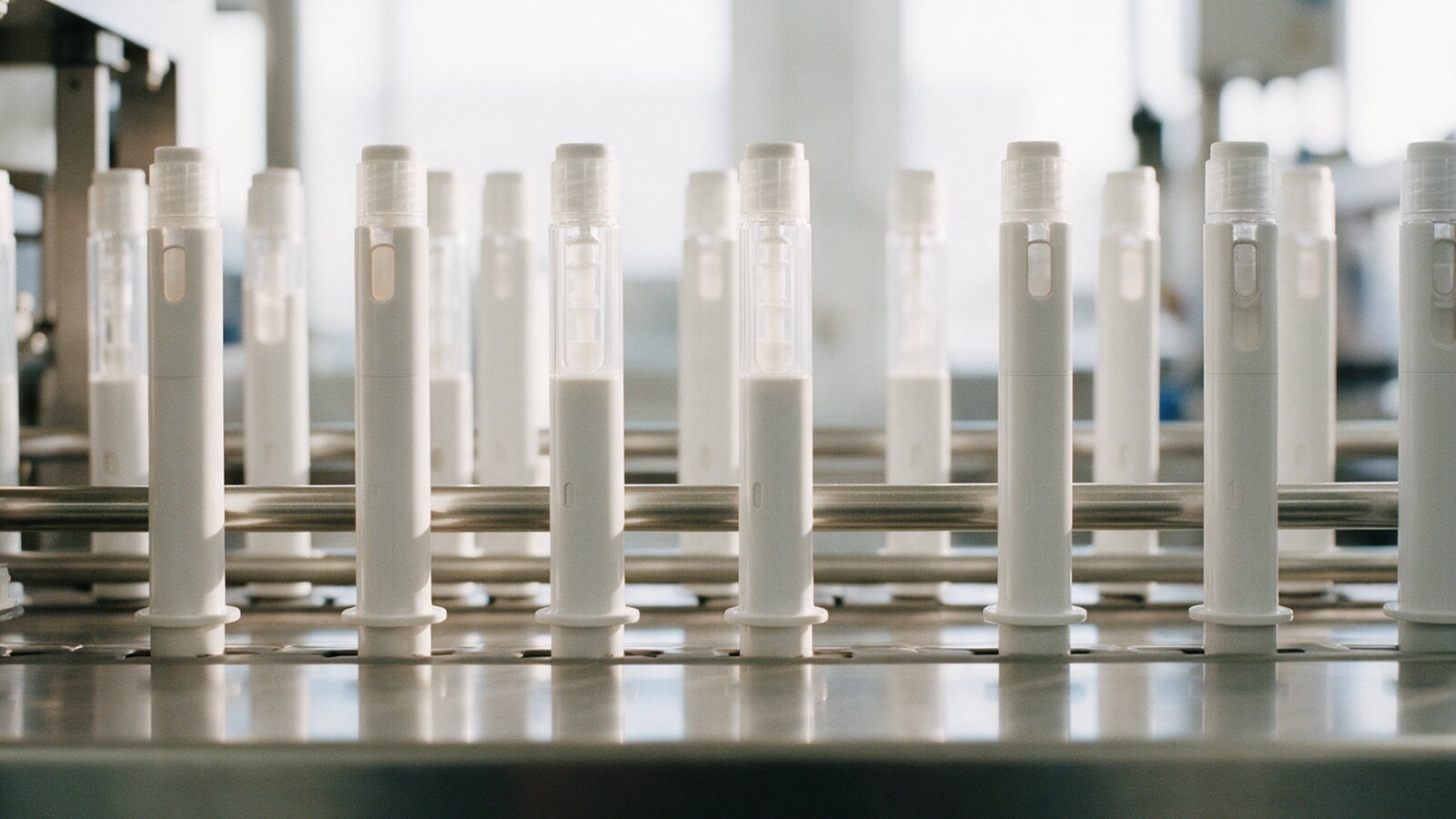
Eli Lilly, the US drugmaker behind the diabetes and weight-loss injections Mounjaro and Zepbound, reported third-quarter sales of $24.4bn, up 39% on a year ago, and raised its 2026 sales forecast to $91bn to $92bn. Profit per share rose to $7.22, but a $4.57-a-share charge for buying early-stage drug projects held it back and lowered the company's full-year profit forecast.
What happened
On Thursday 29 October 2026 Eli Lilly published results for the three months to 30 September 2026. Revenue was $24,397m, up from $17,601m a year earlier, a rise of $6,796m or 38.6%. Mounjaro, its injection for type 2 diabetes, brought in $10,723m, up 64.6% from $6,515m, and Zepbound, the same medicine sold for weight loss, brought in $5,352m, up 49.2% from $3,588m. Together they were $16,075m, about 66% of all sales (our working: 16,075 divided by 24,397). Sales in the United States were about $15.1bn and outside it about $9.3bn. The company also reported US regulatory approvals, including Mounjaro for lowering heart-disease risk in adults with type 2 diabetes, and positive late-stage trial results for retatrutide, an experimental drug, in a head-to-head comparison with Ozempic.
The numbers, explained
Profit tells a more mixed story than sales. Reported (GAAP, the standard accounting measure) net income, the profit after all costs and tax, was $6,451m against $5,583m, up 15.5%, and diluted profit per share was $7.22 against $6.21, up 16.3%. Adjusted (non-GAAP) profit per share, which strips out some one-off items, was $7.48 against $7.02, up 6.6%. The gap between sales growth of 39% and profit growth of 7% to 16% comes mostly from acquired IPR&D, which means the cost of buying rights to unfinished experimental drugs. That charge was $4,181m against $656m a year ago, and the company says it cost $4.57 per share this quarter against $0.71. Operating income, profit from running the business before interest and tax, was $8,608m, up 16.9% from $7,365m. Operating margin, the share of each $1 of sales kept as operating profit, was 35.3% (8,608 divided by 24,397) against 41.8% (7,365 divided by 17,601).
Adding the IPR&D charge back, our own working and not a company figure, operating income would have been $12,789m, or 52.4% of sales, against $8,021m, or 45.6%, a year ago. Gross margin, the share of sales left after the direct cost of making the medicines, was 83.9% ($20,464m of $24,397m) against 82.9%. Research and development spending rose 22.5% to $4,247m, and marketing, selling and administrative costs rose 14.0% to $3,125m. Lilly said the quarter's sales included about $900m of one-off benefits, mainly $410m of milestone payments linked to Jardiance sales and favourable adjustments to rebates and discounts. Taking the whole $900m out, our working gives about $23.5bn, still up about 33% on last year's $17.6bn, although last year's figure also held a $200m Jardiance milestone. Sales were also $1,423m, or 6.2%, above the second quarter's $22,974m.
Why it matters
Lilly makes money by selling prescription medicines, and two of them now dominate the business. Mounjaro and Zepbound contain tirzepatide, a drug that mimics gut hormones to lower blood sugar and appetite. Demand is the driver. A third-party report on the results, Panabee, says the amount of medicine sold rose 53% while the average price it was sold at fell 15%, because of discounts, changes in the mix of products and deals to widen access, including in China. The Panabee figures are a secondary-source summary and we have not confirmed them in the company release. If they hold, they show that the growth came from selling far more medicine at lower prices, not from raising prices. For rivals such as Novo Nordisk, maker of Ozempic, the result shows how fast the obesity and diabetes market is growing.
Lilly raised its 2026 sales forecast, the company's own estimate, to $91.0bn to $92.0bn from $85bn to $87bn, so the midpoint rose by $5.5bn, or 6.4% (5.5 divided by 86). Yahoo Finance, using StockStory's analysis, reported that analysts surveyed by S&P had expected revenue of about $22.6bn and adjusted profit per share of $6.61. Those are analyst estimates, which differ by provider, not company facts. The same report said the shares traded up 4.2% to $1,343 right after the results. The profit forecast moved the other way. Adjusted profit per share for the year is now expected at $35.00 to $36.00, from $35.50 to $36.50. The company says its underlying forecast rose by $4.07 at the midpoint, and the $4.57 charge more than cancelled that (4.07 minus 4.57 is a fall of $0.50). The guidance does not include IPR&D charges after 30 September.
What to watch next
The release gives no date for fourth-quarter results, so check Lilly's investor relations page. It says Phase 3 trials of EloraTZP, another experimental drug, are due to start in the fourth quarter of 2026, and that it has closed the AtaiBeckley purchase and completed the Merida Biosciences acquisition after the quarter ended. It also reported breaking ground on manufacturing expansions in Richmond, Virginia, and Houston, Texas. Dividends paid were $1.73 a share in the quarter against $1.50 a year ago, up 15.3%, although the release names no new declaration date. Things to follow are whether sales keep growing as prices fall, how the company's profit margin changes as it spends on new drug projects, and how the retatrutide results are used in regulatory filings. These are things to follow, not predictions.
- IPR&D: acquired in-process research and development, the cost of buying unfinished experimental drugs
- GAAP and non-GAAP: the standard accounting measure and the adjusted measure that excludes some items
- Operating margin: operating profit as a share of sales
- Guidance: the company's own forecast for the year
Sources
- Lilly reports third-quarter 2026 financial results (SEC 8-K, primary)
- Eli Lilly (NYSE:LLY) reports upbeat Q3 2026, guides for strong full-year sales (Yahoo Finance/StockStory)
- Eli Lilly Q3 Revenue Rises 39% to $24.4 Billion, Raises 2026 Guidance (TradingView News)
- Eli Lilly Earnings Q3 2026 (Panabee)
- Lilly Q2 2026 results and prior forecast (Bolsamania)
More on Eli Lilly (LLY) · Healthcare takes
For information only. Not financial advice. See our disclaimer and editorial standards. Spotted an error? Tell us.