Ericsson (ERIC): Q3 sales up 7% organically, but profit halves against a year-ago gain and higher component costs loom
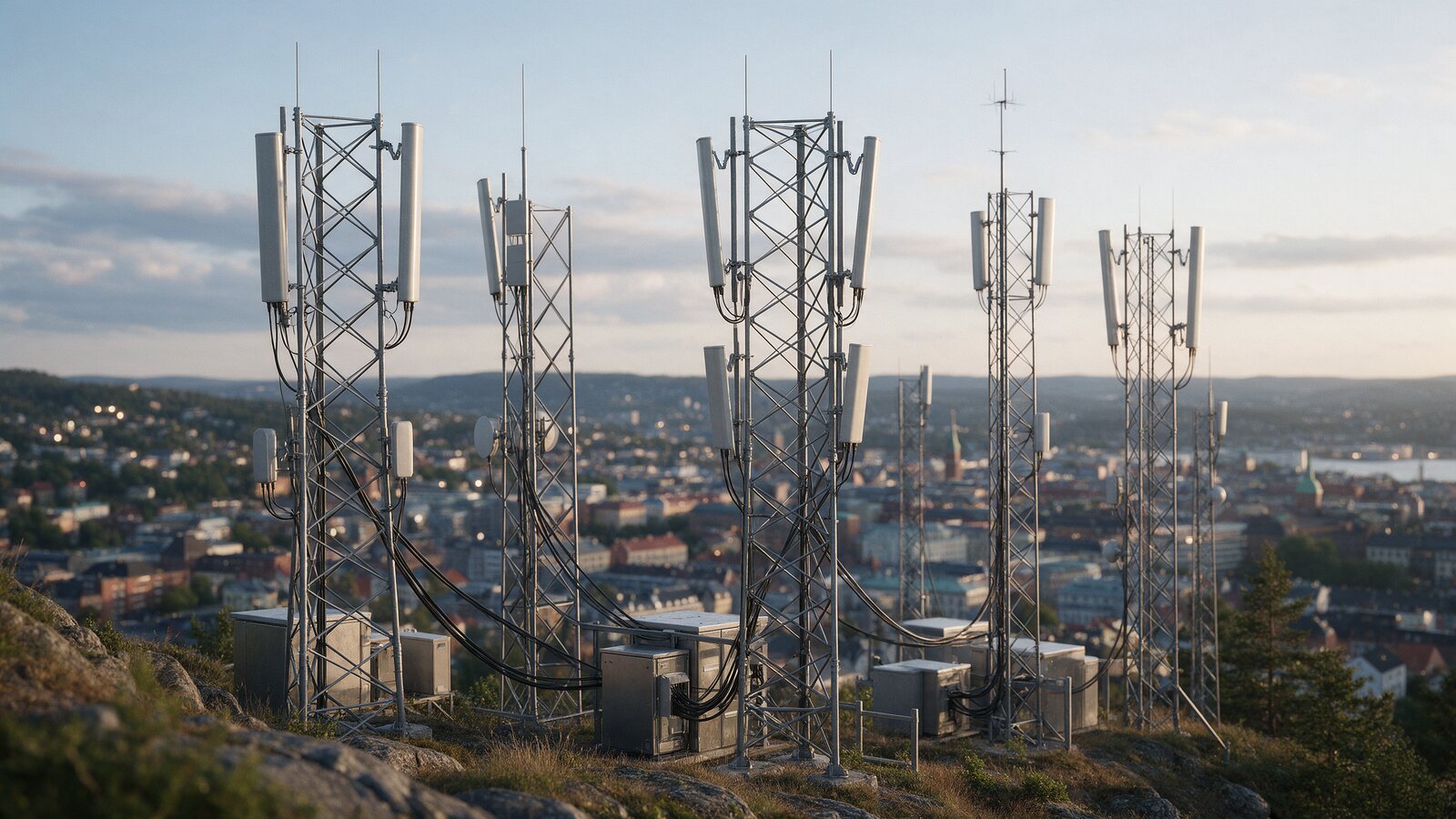
Ericsson, the Swedish maker of mobile network equipment, reported third-quarter sales of SEK 59.5bn on 15 October 2026, up 7% once currency and business sales are stripped out. Reported profit fell by about half only because last year's quarter held a one-off SEK 7.6bn gain; the company says underlying profit improved, but it warns that higher component costs will weigh on margins next year.
What happened
On Thursday 15 October 2026 Ericsson published its report for the three months to 30 September. Sales were SEK 59.5bn (Swedish kronor), compared with SEK 56.2bn a year earlier. The company also reports "organic" growth, which removes the effect of currency moves and of businesses bought or sold; on that basis sales grew 7%. Growth came mainly from Networks, the division that sells radio and core equipment to mobile operators, and organic sales rose in three of its four geographic market areas. The chief executive, Per Narvinger, said the company was "well positioned", and announced a simplified operating structure intended to sharpen customer focus and save costs over time.
The outlook was cautious. Mr Narvinger said the market for radio access network equipment, the antennas and radio units that connect phones to the network, is flat, that geopolitical uncertainty remains elevated and that component costs will weigh on gross margin next year. On the call he said some customers were buying ahead of planned price increases, though the finance chief called this pull-in "not super big". From 1 January 2027 Ericsson will merge its two Asian market areas into one Asia Pacific area and fold its enterprise wireless business into Networks. These are company statements, not outside forecasts.
The numbers, explained
Reported sales rose from SEK 56.239bn to SEK 59.478bn, a gain of SEK 3.239bn, or 5.8% (3.239 divided by 56.239), which the company rounds to 6%. Compared with the second quarter's SEK 52.691bn the rise is 12.9%. Profit looks far worse: adjusted EBITA, the company's own measure of operating profit before amortisation of acquired intangibles and restructuring charges, was SEK 10.121bn against SEK 15.819bn, a fall of 36%, and the margin dropped from 28.1% to 17.0% (10.121 divided by 59.478). The reason is that the 2025 quarter included a SEK 7.6bn capital gain from selling iconectiv, a US telecom data business. Removing it leaves about SEK 8.2bn for last year (15.819 minus 7.6, our rounded working), so this year's SEK 10.1bn is roughly 23% higher.
Net income fell 49%, from SEK 11.300bn to SEK 5.797bn, and diluted earnings per share from SEK 3.33 to SEK 1.77, a fall of 47%. Ericsson says last year's figure included SEK 1.72 per share from the divestment gain; taking that out leaves SEK 1.61, so this year's SEK 1.77 is about 10% higher (1.77 divided by 1.61, our working). The gross margin, the share of sales kept after the direct cost of products and services, was 47.1% reported and 47.7% adjusted for restructuring, against 47.6% and 48.1% a year ago. Licensing income from patents rose 24% to SEK 3.9bn, helped by back-payments for earlier unlicensed periods. Restructuring charges were SEK 0.9bn against SEK 0.3bn. Free cash flow before acquisitions, the cash left after running costs and investment, fell 26% to SEK 4.9bn, and net cash was SEK 60.7bn.
Why it matters
Ericsson earns most of its money by selling and installing radio and core network equipment to telecom operators, then supporting it with software and services; it also collects licence fees from other companies that use its patents. By segment, Networks sales rose 9% to SEK 38.7bn (65% of the group), Cloud Software and Services rose 3% to SEK 15.8bn, and Enterprise fell 10% to SEK 4.6bn because iconectiv was sold. The regional picture was uneven: South East Asia, Oceania and India grew 24% to SEK 8.8bn, in part because of the timing of projects, while the Americas were flat at SEK 19.8bn and fell 1% organically. Such lumpiness is normal in a business built on large operator projects.
The wider point is cost. Ericsson says component prices are rising in the wake of the AI boom, which is competing for the same memory and chips, and it is adjusting prices in current tenders. Its stated aim for the fourth quarter is an adjusted gross margin of 49% to 51% in Networks, which was 50.3% in the third quarter. The group also employed 85,417 people at the end of September, 5% fewer than the 89,898 a year earlier. Independent coverage, citing Bloomberg, put the average analyst forecast for adjusted EBITA at SEK 7.93bn, so the actual figure was about 28% higher (10.121 divided by 7.93); that is an analyst estimate, not a company figure. Outlets differ on the share-price move, which was up to roughly 11% in Stockholm during the day.
What to watch next
Ericsson's next report, for the fourth quarter and full year of 2026, is due on 22 January 2027. The Asia Pacific merger and the changes to its enterprise wireless business take effect on 1 January 2027, and three executives leave on 31 December, according to Bloomberg. The company used SEK 4.8bn for share buybacks in the quarter, SEK 8.1bn so far this year, and paid the second SEK 1.50 dividend instalment on 2 October 2026. We make no forecast on margins or results.
- Organic growth: sales growth after removing currency effects and businesses bought or sold.
- Adjusted EBITA: a company-defined profit measure before amortisation of acquired intangibles and restructuring charges; it is not a standard accounting figure.
- RAN: radio access network, the antennas and radio equipment that link phones to a mobile network.
Sources
- Ericsson reports third quarter results 2026 (company press release)
- Ericsson Third quarter report 2026 (company report, PDF)
- Ericsson Q3 2026 earnings call highlights (Yahoo Finance)
- Ericsson shares surge 11% after Q3 earnings beat expectations (Archyde, citing Bloomberg)
- Ericsson Q3 2026 earnings call transcript (Motley Fool)
More on Ericsson (ERIC) · Technology & AI takes
For information only. Not financial advice. See our disclaimer and editorial standards. Spotted an error? Tell us.