CSX (CSX): Q3 profit up 52% to $1.05bn as sales rise 12%, but fuel surcharges supply over half the gain
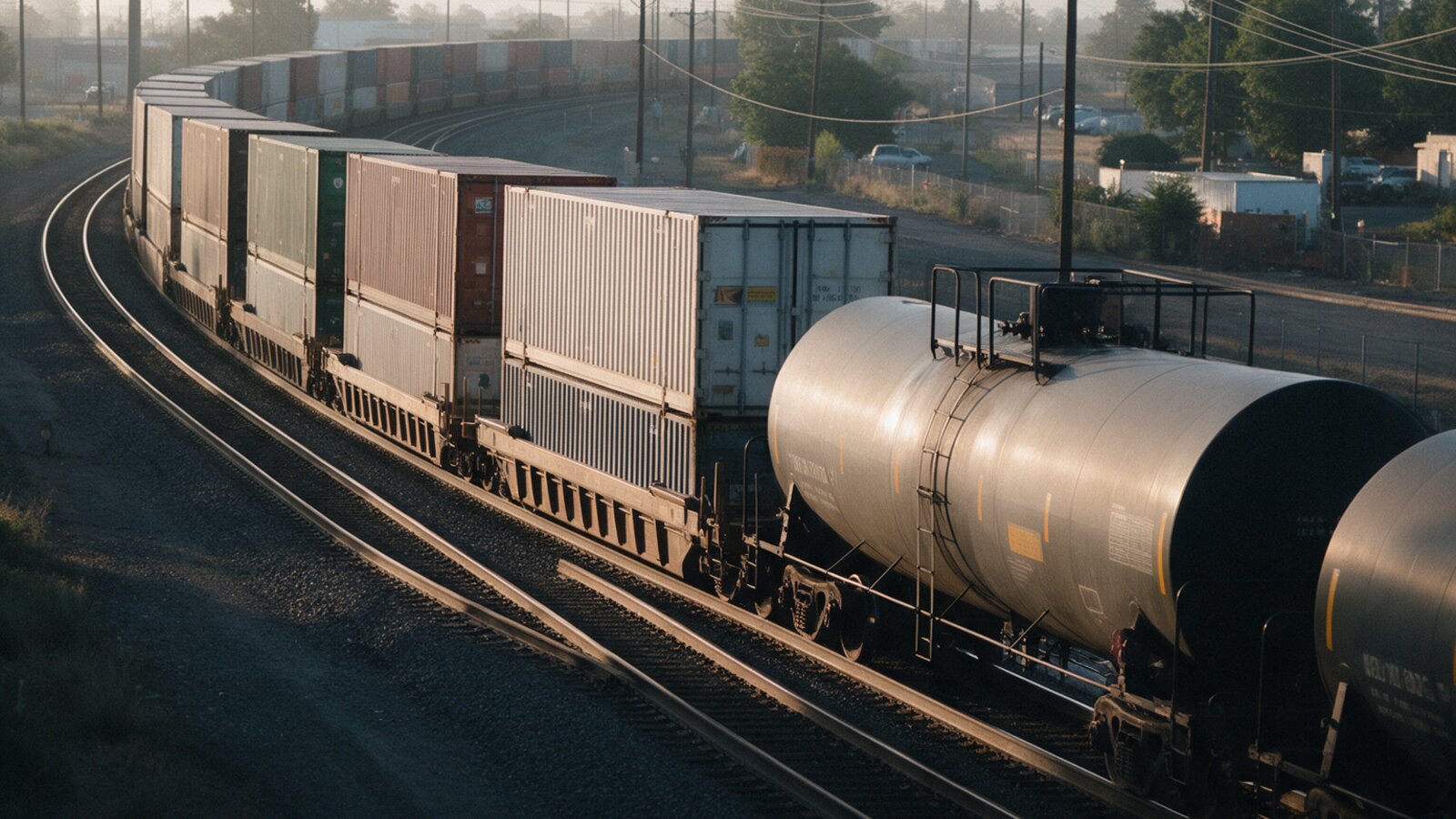
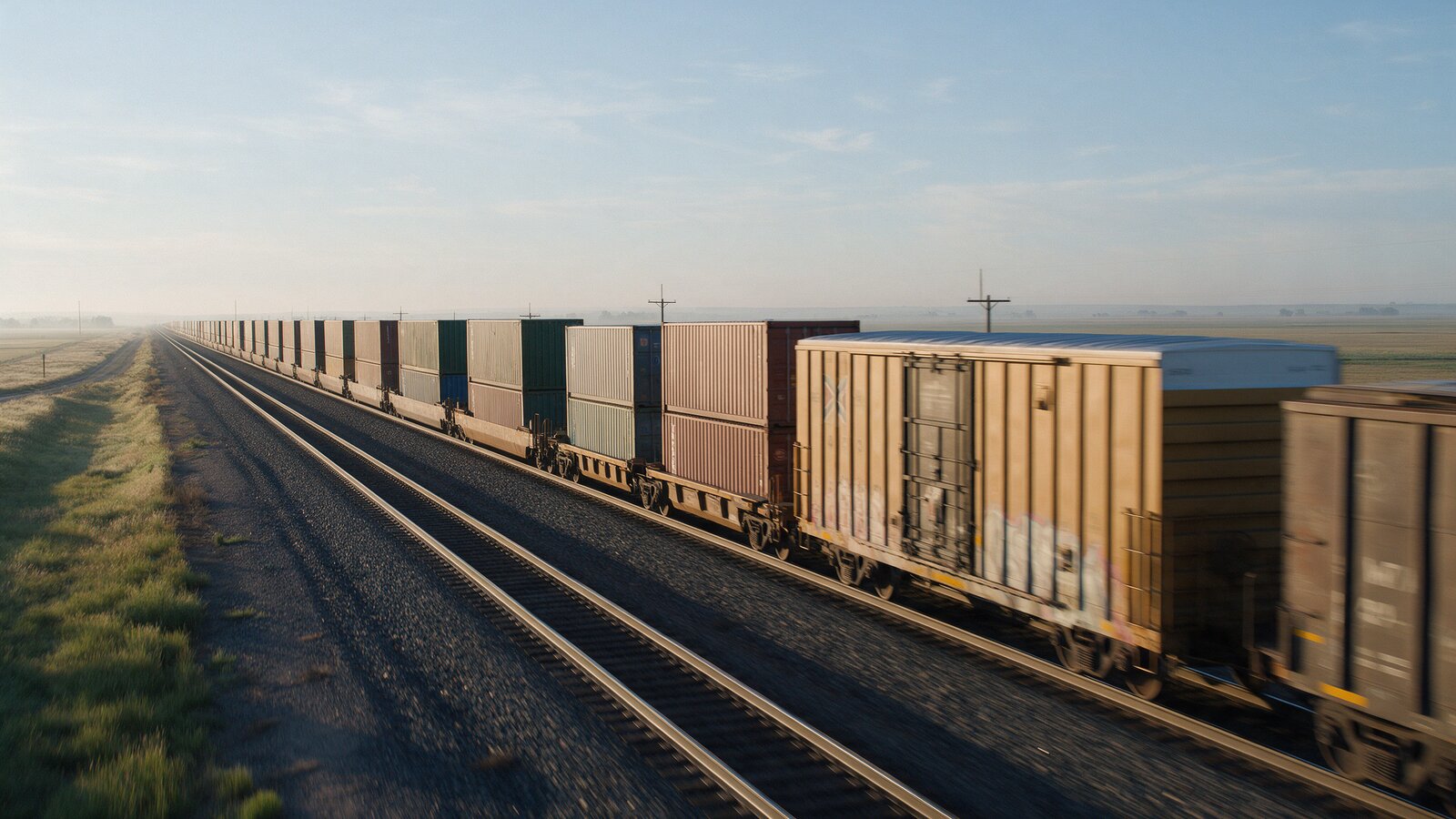
CSX, the US railroad that moves cargo such as chemicals, metals, coal and shipping containers, reported third-quarter sales of $4.02bn, up 12%, and profit of $1.05bn, up 52%. More than half of the sales rise came from fuel surcharges, extra charges that pass higher diesel costs on to customers.
What happened
On 21 October 2026 CSX published its results for the three months to 30 September 2026 in a press release and quarterly report filed with the US Securities and Exchange Commission (SEC) on Form 8-K. Sales were a record $4,017m, up from $3,587m a year earlier. Volume, counted in units such as a railcar or a shipping container, rose 5% to 1.69 million. Intermodal, the business of moving shipping containers and truck trailers by rail, grew fastest, with volume up 7% and sales up 20%. Chief executive Steve Angel said disciplined execution helped CSX "move more freight, for more customers". The company also raised part of its forecast for 2026: it now expects sales to grow by a high single-digit percentage, up from mid-to-high single digits, according to the earnings call transcript.
The numbers, explained
Start with sales. $4,017m against $3,587m is a rise of $430m, or 12.0% (430 / 3,587). Fuel surcharge revenue, the extra charge CSX adds to bills when diesel is expensive, was $466m against $234m, a rise of $232m. That is 54% of the whole $430m increase (232 / 430). Take the surcharge out of both quarters and sales were $3,551m against $3,353m, up $198m or 5.9%. Sales per unit moved rose 7.0%, from about $2,225 (3,587 / 1.612m) to about $2,381 (4,017 / 1.687m), so volume, pricing and fuel all helped. By business, merchandise (chemicals, metals, farm goods) rose 11% to $2,453m, intermodal 20% to $634m (634 / 527) and coal 10% to $537m (537 / 490). Those three plus trucking ($227m) and other ($166m) add to the $4,017m total.
Profit needs care because last year's quarter included a one-off. Under GAAP, the standard US accounting rules, operating income, the profit from running the railroad before interest and tax, was $1,570m against $1,087m, up 44.4%. But the year-earlier figure was cut by a $164m non-cash goodwill impairment, a write-down of the value of past acquisitions. Without it, operating income was $1,251m, so the underlying rise was $319m, or 25.5% (1,570 / 1,251). The operating margin, operating income as a share of sales, was 39.1% (1,570 / 4,017) against 30.3% reported a year ago, or 34.9% without the write-down (1,251 / 3,587): up 4.2 percentage points. Put another way, total costs of $2,447m were 60.9% of sales. Net earnings were $1,052m against $694m, up 51.6%; profit per diluted share was $0.57 against $0.37 reported (up 54%) and $0.44 adjusted (up 29.5%). The adjusted figures are ones CSX defines itself, not under accounting rules.
Why it matters
CSX makes money by charging customers to move freight over its own network of track in the eastern United States, so its results are a read on how much goods are moving through the economy. Costs excluding the one-off were up just 4.8% (2,447 against 2,336, which is 2,500 less the 164 write-down) on 12% more sales, helped by purchased services and other costs falling from $730m to $657m. The call transcript says costs other than fuel fell 3% while volume rose 5%. Fuel was the opposite: the fuel bill rose from $281m to $451m, up 60.5%, and Zacks, an independent research firm, reports locomotive fuel prices rose 67%. Because the surcharge more than covers the extra fuel (up $232m against a $170m rise in fuel cost), it added to profit in dollars but, management said, took about 0.7 percentage points off the margin. Management also said intermodal grew as customers moved freight from trucks to rail when truck capacity was tight and diesel was dear. That is a company explanation, not something we can test.
Cash and balance sheet give a second view, though CSX reports them for nine months, not the quarter. Cash from operations for the nine months to 30 September was $4,216m against $3,227m (up 30.6%), while spending on track and equipment fell from $2,225m to $1,712m (down 23.0%). CSX reports free cash flow before dividends, the cash left after investment, of $2,648m against $1,066m; the definition is the company's own. It bought back $1,061m of its shares and paid $779m in dividends over the nine months, with $543m of the buybacks in the third quarter against $112m a year ago. Total debt was $18,804m at 30 September and cash $1,223m. Not every measure improved: Zacks reports that the time cars sit in yards (dwell) rose 12% to 10.6 hours and the share of trains meeting their plan fell to 73% from 83%. We could not confirm those two figures from the CSX documents we read, so treat them as a single-source report.
What to watch next
Dated and confirmed items are limited. CSX's own forecast for the full year 2026, repeated on the call, is sales growth in the high single digits, operating margin up by more than 3.5 percentage points, spending on track and equipment below $2.4bn, and free cash flow growth above 80%. On the call management also said that, as it usually does, it expects the margin to be 2 to 3 percentage points lower in the fourth quarter than in the third because of winter weather, and that it has over 100 productivity projects planned for 2027. These are the company's statements, not facts yet. The date of CSX's fourth-quarter results was not in the documents we read, so we do not give one. We make no prediction about the results.
- GAAP: the standard US accounting rules, as opposed to adjusted figures a company defines itself
- Fuel surcharge: an extra charge added to freight bills when diesel prices rise
- Intermodal: moving shipping containers and truck trailers by rail
- Operating margin: operating income as a share of sales
Sources
- CSX Q3 2026 quarterly financial report, Form 8-K (SEC, primary)
- CSX Q3 2026 press release, Form 8-K (SEC, primary)
- CSX Q3 Earnings Beat Estimates on Higher Volumes and Pricing (Zacks via Yahoo Finance)
- CSX Q3 2026 earnings call transcript (Motley Fool)
- CSX Aktie: Gewinn und Umsatz uebertreffen im dritten Quartal die Erwartungen (Goldesel)
More on CSX (CSX) · Industrials takes
For information only. Not financial advice. See our disclaimer and editorial standards. Spotted an error? Tell us.