WaterSure: the water bill cap, who qualifies and the changes due in 2027
Published · 5 min read · Figures checked . UK rules and rates change, so check the official sources below before you act.
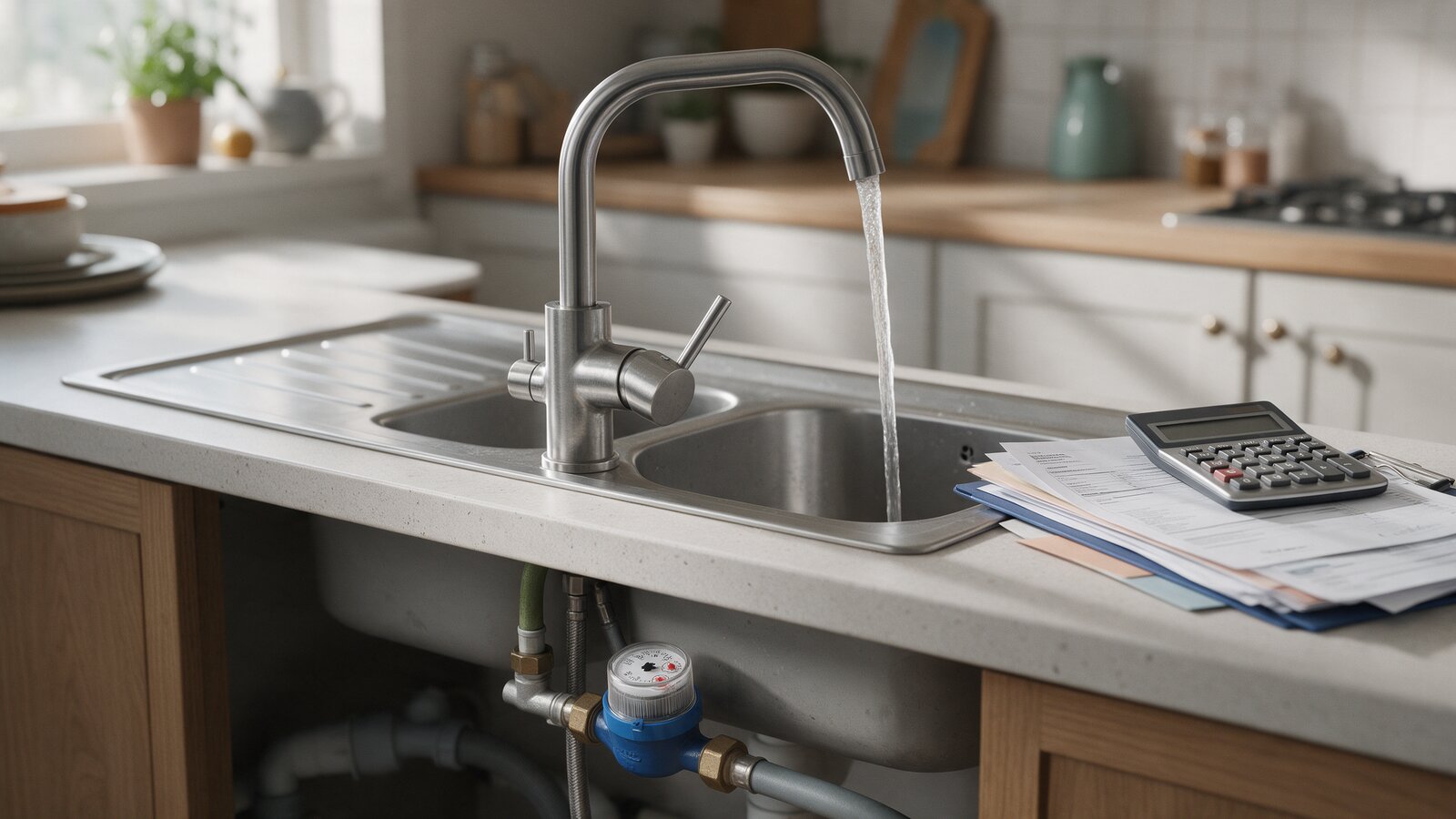
WaterSure is a government scheme in England and Wales that caps the water bills of some low-income households that use a lot of water. This guide explains who qualifies today, what is due to change in early 2027, and where to get free help.
What WaterSure is and how it works
WaterSure is a scheme that limits what a qualifying household pays for water each year. Instead of being charged for every litre on the meter, the household pays no more than a set amount, which is based on an average bill. It exists because some households use far more water than average for reasons they cannot easily control, such as a large family or a medical condition, and would otherwise face a bill they cannot afford. It is separate from social tariffs, which are discounted rates that each water company designs for itself. GOV.UK reports that about 260,000 households benefited in 2024/25, roughly 230,000 in England and 30,000 in Wales, saving an average of £325 each, which it describes as over a third of their typical bill.
The scheme is run by your water company, not by a central government office, so you apply to the company that sends your bill, and you generally need to renew the application each year. In England the scheme is set nationally. In Wales, the Consumer Council for Water (CCW), the independent watchdog for water customers, says the two Welsh water companies run similar support on a voluntary basis under their own equivalent schemes. Water companies cannot cut off a household's supply for non-payment, according to Citizens Advice, but they can pursue unpaid bills through the courts, which is one reason many people contact their company early.
Who qualifies at the moment
Under the current rules, as set out by GOV.UK, a household must meet three tests. First, it must have a water meter, or be waiting for one to be fitted. Second, someone in the household must receive a qualifying means-tested benefit, which is a benefit that depends on income or savings. GOV.UK lists Universal Credit, Pension Credit, Income Support, income-based Jobseeker's Allowance, income-based Employment and Support Allowance, Housing Benefit, Child Tax Credit and Working Tax Credit. The CCW's summary page names a shorter list, Universal Credit, Housing Benefit and Pension Credit, so it is worth asking your company which benefits it accepts. Third, the household must use a lot of water for one of two reasons.
- Three or more children under 19 live in the household, usually shown through Child Benefit
- Someone in the household has a listed medical condition that raises water use, such as Crohn's disease, ulcerative colitis, incontinence or renal failure needing dialysis at home, and medical evidence is currently required
- Heavy use for a garden sprinkler or swimming pool does not count, according to the CCW
What is due to change in early 2027
On 6 March 2026 the government announced reforms to WaterSure that GOV.UK says are set to come into force in early 2027. They are mandatory for companies in England and voluntary in Wales. Households receiving Disability Living Allowance, Attendance Allowance or Personal Independence Payment (PIP) will be added as qualifying benefits for the first time, as long as household income is £25,745 a year or less and they still use a lot of water for a medical reason. A doctor's note will no longer be needed to prove a medical condition, which GOV.UK says water companies have agreed to voluntarily. The live rules today are the ones in the previous section.
The way the cap is set will also change. GOV.UK says companies will have to use the lower of the overall average bill and the metered average bill as the cap, and a single-person household will be capped at the average for one person rather than for a larger household. GOV.UK estimates that about 53,000 additional households will join through the disability-benefit change, that around 53,000 single-person households will save a further £100, and that around 130,000 multi-person households will save a further £26 a year on average. The cost is expected to be met by an extra £1.14 on the bills of other water customers.
A worked example
These figures are illustrative only and are not a forecast of any real bill. Suppose a household's metered bill is £890, matching the average pre-WaterSure bill GOV.UK reports. If WaterSure applied and the household saved the 2024/25 average of £325, it would pay £890 minus £325, which is £565, and £325 divided by £890 is about 36.5 per cent, consistent with GOV.UK's description of over a third. Now suppose a single person had been capped at a household average of £700 and, after the reform, was capped at an average for one person that was £100 lower. The bill would fall from £700 to £600.h Common mistakes and where to get free help
One common mistake is assuming the scheme is automatic. It is not: the household has to apply to its own water company, and having a water meter is required, so a household without one may need to ask about a meter or, if one cannot be fitted, an assessed charge. Another is assuming that WaterSure is the only help. Citizens Advice says each water company runs its own social tariff with its own rules, that single occupiers without a meter can ask about a single occupier tariff, and that some pensioners receiving Pension Credit may be eligible for a discount. This guide covers England and Wales only. Scotland and Northern Ireland are run under separate arrangements, so check with Scottish Water or NI Water.
Free, independent help is available. The Consumer Council for Water gives advice on problems with a water company, Citizens Advice can help with bills and arrears, and MoneyHelper and StepChange offer free guidance on wider money worries. If you are struggling to pay, many people find it helps to tell the company early and ask for a payment plan, as Citizens Advice suggests.h Check before you act
Eligibility rules, benefit lists and dates can change, and the 2027 reforms were still announced rather than in force when this was checked, so please confirm the current position on the official pages linked below and with your water company.
Sources
For information only. See our disclaimer and editorial standards. Spotted an error? Tell us.