Exelon (EXC): Q3 adjusted profit per share edges up to $0.87 and the company narrows its 2026 forecast
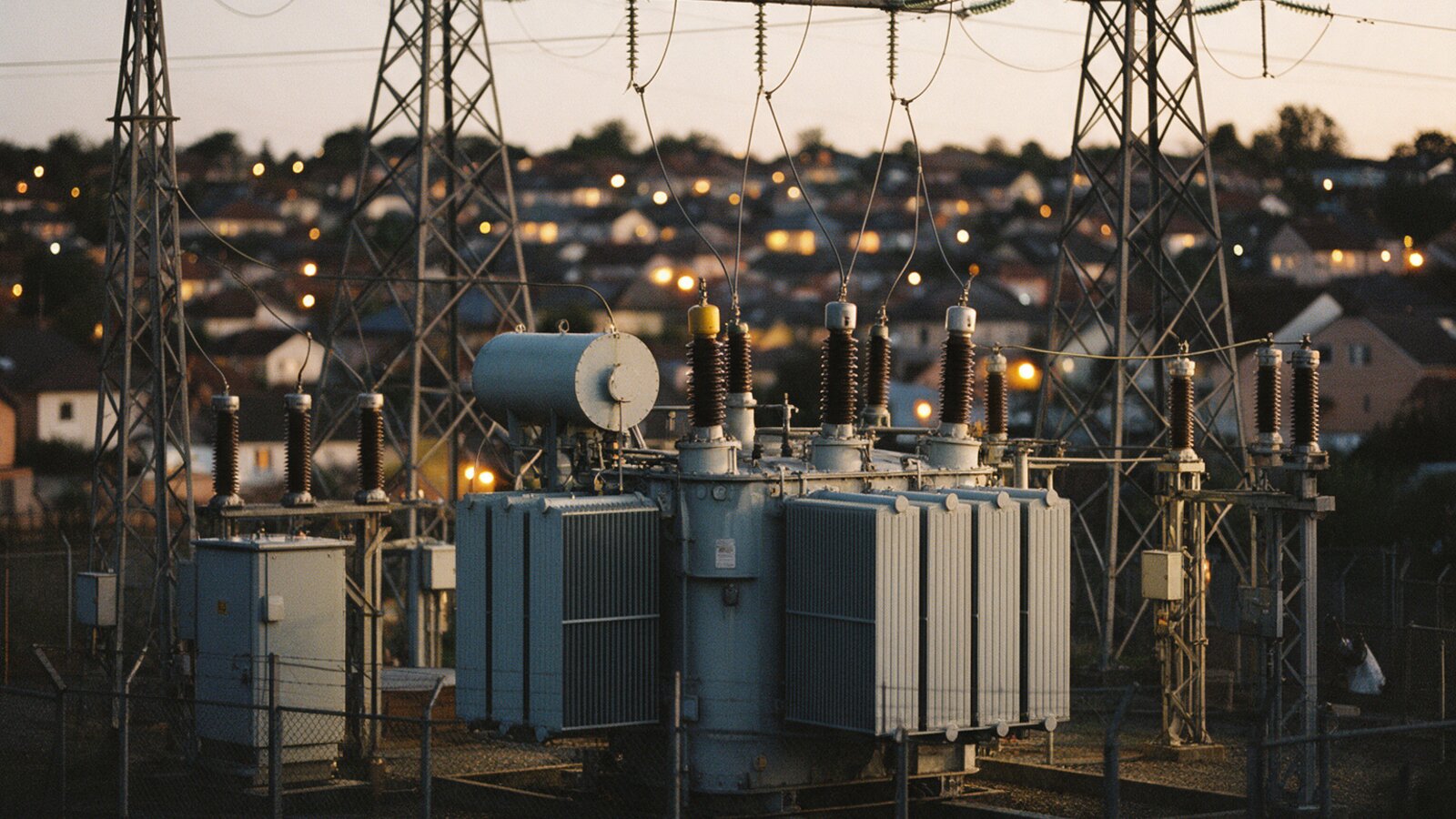
Exelon, the Chicago-based company that delivers electricity and gas to almost 11 million customers through six regulated utilities, reported third-quarter sales of $7,319m, up 9.2%, and adjusted profit of $0.87 per share against $0.86 a year earlier. Profit under standard accounting rules fell to $0.70 per share. It raised the bottom of its 2026 forecast range.
What happened
On 30 October 2026 Exelon published results for the three months to 30 September. Operating revenues, its sales, were $7,319m against $6,705m a year earlier. Net income under US GAAP (the standard accounting rules) was $729m, or $0.70 per diluted share, against $875m, or $0.86. On the company's own "adjusted (non-GAAP)" measure, which removes items management says are not part of day-to-day operations, profit was $897m, or $0.87 per share, against $874m, or $0.86. The company also narrowed its 2026 forecast for adjusted profit per share to $2.85 to $2.91, and said it still expects adjusted profit per share to grow at an annual rate near the top of 5% to 7% from 2025 to 2029. The board declared a regular quarterly dividend of $0.42 per share. All figures are in US dollars.
The numbers, explained
Start with the gap between the two profit measures. GAAP net income fell by $146m (875 minus 729), which is 16.7% of last year's figure. Adjusted profit rose by $23m (897 minus 874), or 2.6%, and per share by 1.2% (0.01 divided by 0.86). The difference is explained in the company's reconciliation, which adds back four items after tax: $130m of what it labels "regulatory matters" ($0.13 per share, almost all in its Pepco Holdings unit), $26m of project impairments (write-downs of projects), $15m of cost-management programme costs, and a $3m credit for environmental costs that it subtracts. Check: 729 plus 130 plus 26 plus 15 minus 3 equals 897. The release does not explain the regulatory item further, so we do not either. Sales rose $614m (7,319 minus 6,705), or 9.2%, helped by higher rates that regulators approved for ComEd, BGE and Pepco Holdings.
Costs grew faster than sales. Total operating expenses rose from $5,205m to $5,940m, up 14.1%. Within that, the cost of buying power and gas rose 8.4% to $2,917m, and operating and maintenance spending rose 33.4% to $1,564m (from $1,172m). As a result operating income, sales minus those costs, fell from $1,500m to $1,379m, down 8.1%. By business, adjusted profit at ComEd (northern Illinois) rose 10.5% to $412m, at BGE (central Maryland) rose 45.1% to $119m from $82m, and at Pepco Holdings (Washington DC, Delaware, New Jersey, Maryland) rose 10.3% to $320m. At PECO (south-eastern Pennsylvania) it fell 33.2% to $167m from $250m, which the company puts down mainly to higher storm costs, because last year it had deferred some extraordinary storm costs, plus higher income taxes and contracting costs.
Why it matters
Exelon does not generate electricity. It owns the wires, poles and pipes that carry power and gas to homes and businesses, and it earns a return that regulators allow on the money it invests in them. That is why results follow rate decisions: when a regulator approves higher rates, profit rises, as in the Pepco Maryland case, where the Maryland Public Service Commission approved a $51m annual increase in electric distribution rates on 28 August 2026 at a 9.40% return on equity (the profit rate allowed on shareholders' money). For customers, the same decisions mean higher bills. The company says its rates remain below the national average and that its utilities rank 1st, 2nd, 5th and 6th for reliability in the US; those are its own claims.
The cash figures show the scale of the building programme. In the first nine months of 2026, cash from operations was $5,404m against $5,010m, up 7.9%, while capital expenditure, spending on equipment and buildings, was $6,799m against $6,095m, up 11.6%. Spending therefore exceeded operating cash by $1,395m, which is why a utility borrows. The company said it completed its planned 2026 debt financings, including $750m of PECO first mortgage bonds at 5.00% due 2031 and $75m of Delmarva Power bonds at 5.00% due 2036. Rivals face the same pattern of heavy investment funded by regulators' rate decisions and debt, so Exelon's quarter is a reading on how that model is working in the Mid-Atlantic and Illinois.
What to watch next
The dated items are the dividend and the regulatory calendar. The $0.42 dividend is payable on 15 December 2026 to shareholders on the register at the close of 4 December 2026. The release gave no date for fourth-quarter results, so we state none. Exelon's forecast range was narrowed from $2.81 to $2.91 to $2.85 to $2.91, which lifts the midpoint from $2.86 to $2.88, a rise of 0.7%; that is the company's own forecast, not a fact. Analysts had expected adjusted profit of about $0.80 per share (Zacks and Finviz both cite $0.80) and sales of about $6.8bn to $6.9bn, with the sources differing slightly on the sales figure, so we treat those as context only.
- GAAP: the standard US accounting rules for reported profit
- Adjusted (non-GAAP): the company's own profit measure that leaves out items it calls one-off
- Return on equity: the profit rate a regulator allows a utility to earn on shareholders' money
Sources
More on Exelon (EXC) · Energy & Commodities takes
For information only. Not financial advice. See our disclaimer and editorial standards. Spotted an error? Tell us.