Caterpillar (CAT): Q3 sales up 17% to $20.7bn and profit per share up 46%, with a record backlog
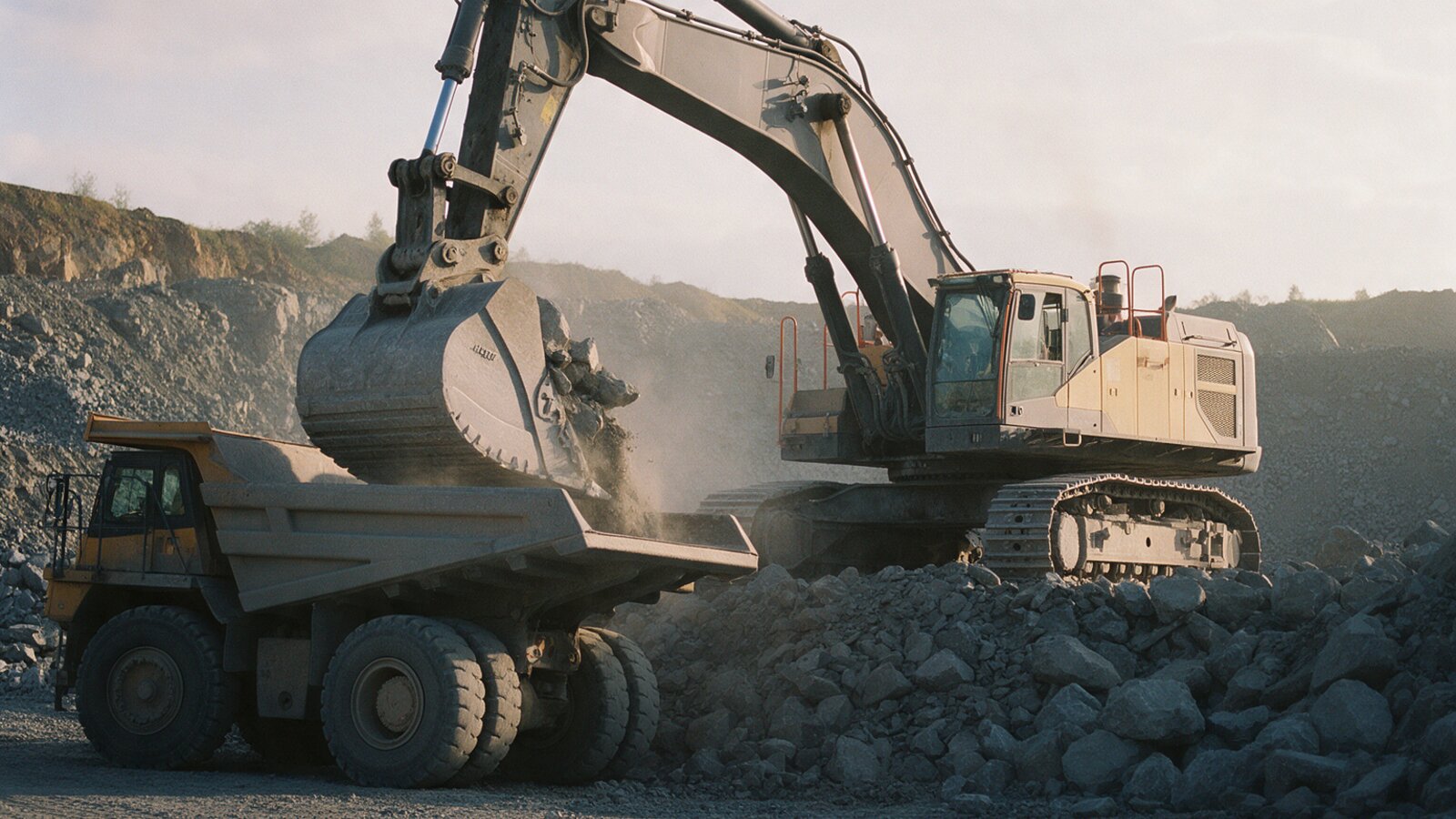
Caterpillar, the maker of construction, mining and energy equipment, reported third-quarter sales of $20.7bn, up 17% on a year earlier, and profit per share of $7.13 under standard US accounting, up 46%. Operating profit rose 38% and the share of each sale kept as operating profit climbed to 20.4%. The company called its order backlog a record but did not give a dollar figure in its release.
What happened
On 29 October 2026 Caterpillar published its results for the three months to 30 September. Sales and revenues were $20.682bn against $17.638bn a year earlier, a rise of $3.044bn. All three main businesses grew: Power & Energy, which makes engines, turbines and generator sets, sold $8.784bn; Construction Industries, which makes machines such as excavators and loaders, sold $7.983bn; and Resource Industries, which serves mining and quarrying customers, sold $4.615bn. Financial Products, the lending and leasing arm, added $1.177bn of revenue. Chairman and chief executive Joe Creed said the results "reflect the durability of our end markets, with strong order rates and a record backlog". The release gives no formal forecast for the year, only a remark that the company is "positioning us for a strong year".
The numbers, explained
Profit first. Operating profit, meaning profit from running the business before interest and tax, was $4.214bn against $3.052bn, up 38.1% (4,214 divided by 3,052 is 1.381). Dividing by sales gives the operating margin, the share of each dollar of sales left as operating profit: 4,214 divided by 20,682 is 20.4%, against 3,052 divided by 17,638, or 17.3%. Profit attributable to shareholders was $3.287bn against $2.300bn, up 42.9%. Because Caterpillar has bought back shares, profit per share grew faster than total profit: $7.13 against $4.88, up 46.1% (7.13 divided by 4.88 is 1.461). Excluding restructuring costs of $41m, which the company treats as one-off, adjusted profit per share was $7.20 against $4.95, up 45.5%, and the adjusted margin was 20.6% against 17.5%.
Next, where the extra sales came from. Caterpillar's own breakdown shows $2.207bn from higher sales volume, meaning more machines and engines sold, and $663m from price realization, meaning higher prices actually obtained. Our working: price alone is 663 divided by 17,638, about 3.8% of last year's sales, and volume is about 12.5%. Currency added $58m. Together these three explain about $2.93bn of the $3.04bn rise, with Financial Products and other items making up much of the rest. By region, North America sold $12.017bn, up 24% and 58% of the total (12,017 divided by 20,682), while Asia/Pacific fell 2% to $2.813bn. Operating profit also included $128m of tariff recoveries, which the company labelled as International Emergency Economic Powers Act (IEEPA) recoveries. Our working: without that item, operating profit would be $4.086bn, a margin of about 19.8%. The release also says manufacturing costs, mainly materials including tariffs, reduced profit by $208m in Resource Industries and $252m in Construction Industries.
Why it matters
Caterpillar earns money in two main ways. It sells new machines and engines through independent dealers, and it earns recurring income from parts, services and financing once those machines are in use. Its three machinery and engine businesses all grew sales by 15% to 18% and profit by 14% to 33% (Power & Energy $2.143bn against $1.633bn, Construction Industries $1.831bn against $1.377bn, Resource Industries $622m against $544m, our arithmetic). Power & Energy made a segment margin of 24.4% (2,143 divided by 8,784), the highest of the three. That matters because it shows growth in sales and in the profit kept from each sale, not just bigger volumes. The backlog, orders accepted but not yet delivered, is called a record by the company; because no figure was given in the release we do not quote one. Customers range from builders and quarry operators to firms that buy engines and generators.
Cash and returns to shareholders add context. Enterprise operating cash flow, the cash the whole group generated from operations, was $4.4bn in the quarter, and cash at the end of September was $7.929bn, against $9.980bn at 31 December 2025, a fall of $2.051bn or 20.6%. Caterpillar spent $1.2bn on share buybacks and $0.7bn on dividends in the quarter. Independent coverage by StockStory reported adjusted profit per share of $7.20 against analysts' average estimate of $7.03 (2.4% above) and sales of $20.68bn against $20.37bn (1.5% above), and said the shares fell about 9.5% after the results. The share fall is that outlet's report, not a figure from the company; the release does not explain it and we do not offer a reason.
What to watch next
Dated events are limited because Caterpillar's release gives no forecast and we found no confirmed date for its fourth-quarter report, so we state none. What can be followed is the detail in the company's quarterly filing with the US Securities and Exchange Commission, the Form 10-Q, and the next results release, where readers can compare these figures: sales of $20.682bn, an operating margin of 20.4%, adjusted profit per share of $7.20, price realization of $663m and tariff recoveries of $128m. Whether the backlog is quantified, whether tariff recoveries recur or fall away, and how the 2% fall in Asia/Pacific sales develops are the open items. These are things to follow, not predictions, and nothing here says how future results will compare.
- Operating profit: profit from running the business, before interest and tax
- Price realization: the extra income from selling at higher prices than a year earlier
- Backlog: orders accepted but not yet delivered
- Adjusted profit per share: profit per share excluding items the company treats as one-off, such as restructuring
Sources
More on Caterpillar (CAT) · Industrials takes
For information only. Not financial advice. See our disclaimer and editorial standards. Spotted an error? Tell us.