Axon Enterprise (AXON): US Homeland Security picks its Dedrone counter-drone platform, but no contract value is disclosed
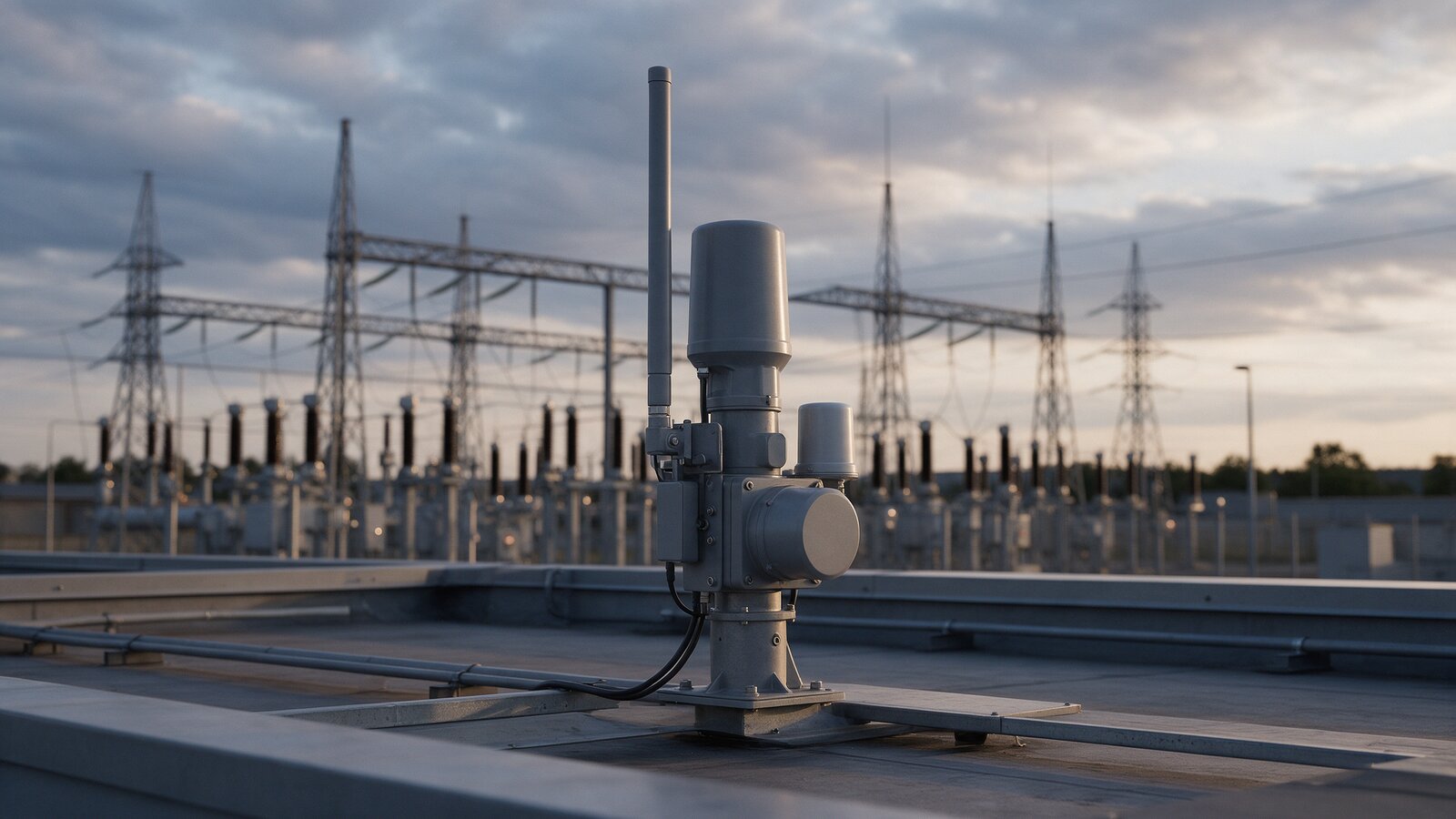
On 15 October 2026 Axon, the maker of TASER devices and police body cameras, said the US Department of Homeland Security (DHS) had chosen its Dedrone platform to watch for and respond to drones near critical infrastructure. The contract is open-ended and no dollar value was given. Axon shares rose about 2% that day, then fell 6.45% on 16 October, a day the Nasdaq Composite fell 2.1%.
What happened
On Thursday 15 October 2026 Axon issued a press release headed "Axon Reports Significant Momentum Across Federal Sector as U.S. Government Fiscal Year Closes". It named three items. First, federal agencies added more than 22,000 Axon body-worn cameras and digital evidence management licences this year, including translation tools. Second, DHS selected Axon's Dedrone platform "to deliver real-time airspace monitoring", identify drones and counter threats to critical infrastructure, under an indefinite delivery, indefinite quantity (IDIQ) contract. Third, the Department of Veterans Affairs added more than 1,600 TASER 10 devices for the police officers who protect its medical centres.
The release gives no contract values, durations or unit counts for the DHS or VA awards, and no executive is quoted. That matters because of what an IDIQ contract is: the government agrees a framework of prices and terms, but each purchase is a separate order placed later, so the revenue Axon eventually earns depends on orders DHS has not disclosed. Axon's chief financial officer, Brittany Bagley, said at a Goldman Sachs conference on 8 September that it was "still too early to tell" how the government would split the counter-drone money across products, as reported by Yahoo Finance. Axon agreed to buy Dedrone in 2024, so this is a contract for a business it already owns.
The numbers, explained
The release itself contains no financial figures, so the context comes from Axon's second-quarter 2026 results, filed with the US Securities and Exchange Commission (SEC) on 5 August 2026. Revenue was $904.4m against $668.5m a year earlier. Our working: 904.4 minus 668.5 is 235.9, and 235.9 divided by 668.5 is 35.3%, matching the 35% Axon reports. Software and services, its subscription-style business, grew 36% to $397.8m (from $292.2m). Platform Solutions, the segment that includes Dedrone, rose from $67.3m to $149.8m, up 123% (82.5 divided by 67.3 is 122.6%). Axon says Dedrone's own revenue passed $100m in the quarter but gives no exact figure.
Profit per share moved the other way. Net income on the US accounting basis (GAAP) was $29.4m, or $0.36 a share, down from $36.1m, or $0.44, a year earlier, a fall of 18.5% in the total (29.4 divided by 36.1 is 0.815). The adjusted figure, which excludes items such as share-based pay, was $1.88 a share against $2.18, down 13.8% (0.30 divided by 2.18). Adjusted EBITDA, a measure of operating profit before interest, tax, depreciation and some other items, rose to $242.0m from $171.6m, up 41%. Divided by revenue that is a 26.8% margin, against 25.7% a year ago. Axon's full-year forecast is for 32% to 34% revenue growth, raised from 30% to 32%, with an adjusted EBITDA margin of about 25.5%.
Why it matters
Axon earns money in two ways. It sells hardware, mainly TASER devices (second-quarter revenue $261.3m, up from $216.2m, or 20.9%) and cameras, and it sells software and cloud storage on recurring contracts. Annual recurring revenue, the yearly value of contracts that renew, was $1,639m at 30 June 2026, up 39% from $1,183m. Future contracted bookings, which are signed deals not yet turned into sales, stood at $15.1bn. Counter-drone systems are a newer line. Airports, power stations and other infrastructure operators want to know when a drone is nearby, and a federal choice of Dedrone could make it a reference product for other public-sector buyers, though the release does not say so.
The share-price reaction needs care. Axon closed up 2.13% on 15 October, then fell 6.45% to $390.29 on 16 October, and is down 31.28% for 2026 so far, according to Yahoo Finance. The Nasdaq Composite fell 2.1% on 16 October, so Axon fell about three times as much as the market, and Axon issued no new release that day. We cannot tie the fall to the contract news. Yahoo also notes that analysts expect a gross margin near 61% for 2026 and that Bagley said camera costs are rising with memory-chip prices; the first is an estimate, not a company figure.
What to watch next
Axon had not announced a date for its third-quarter results in the Yahoo Finance report published after the 16 October fall, so we give none. The figures to compare when they arrive are third-quarter revenue and adjusted EBITDA against the full-year forecast above; Yahoo cites analyst estimates of about $939m of revenue and $232m of adjusted EBITDA, which are estimates, not company figures. Whether Axon later discloses a value or order size for the DHS contract is also worth tracking. The US government fiscal year ended on 30 September, which the release itself references. We make no forecast.
- IDIQ contract: a government contract that sets terms and a ceiling but leaves the amounts and timing of purchases to later orders.
- Adjusted EBITDA: operating profit before interest, tax, depreciation, amortisation and some other items the company chooses to exclude.
- Annual recurring revenue: the yearly value of subscription-type contracts that renew.
Sources
- Axon press release, 15 October 2026 (via Finviz)
- Axon Q2 2026 results (SEC 8-K, Exhibit 99.1)
- Axon Stock Fell 6% in a Day and Is Down 31% in 2026 (Yahoo Finance)
- Axon secures federal contracts for cameras, drones, tasers (Investing.com)
- Axon wins federal contracts for cameras, drones, and Tasers (GuruFocus)
- Axon reports significant momentum across federal sector (StockTitan)
More on Axon Enterprise (AXON) · Industrials takes
For information only. Not financial advice. See our disclaimer and editorial standards. Spotted an error? Tell us.